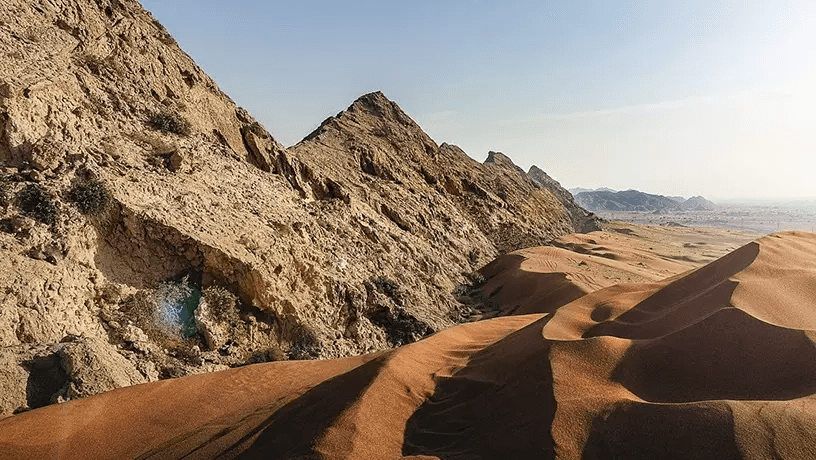
Archaeologists working in Sharjah have uncovered stone tools dating back approximately 80,000 years, a discovery that significantly reshapes our understanding of early human habitation in the region and could bolster efforts to secure UNESCO World Heritage status for the site.
The findings, resulting from excavations at Jebel Faya between 2012 and 2017, reveal that ancient humans didn’t merely pass through the area but lived and thrived there for extended periods. An international team, led by the Sharjah Archaeology Authority in collaboration with universities from Germany and the UK, meticulously documented the site.
The sophisticated stone tools discovered were crafted for hunting, animal butchery, plant processing, and toolmaking. Their age was determined using luminescence dating techniques. Researchers link this sustained human presence to the end of a climatic phase known as Marine Isotope Stage 5a, roughly 80,000 years ago. During this period, increased monsoon rains transformed the harsh desert landscapes into green grasslands and lakes, creating a viable environment for long-term settlement.
Beyond their age, the tools are remarkable for their manufacturing technique. Unlike other regional sites featuring triangular or oval tools, the inhabitants of Jebel Faya employed bidirectional reduction. This advanced method involved striking a stone core precisely at both ends to detach long blades and flakes, demonstrating a high level of skill and deep environmental knowledge.
“The study highlights the importance of adaptability and ingenuity for early human populations facing changing environments,” noted researchers involved in the project. The discovery underscores the significance of the Arabian Peninsula in understanding early human migrations.
The importance of Jebel Faya is now under international consideration. UNESCO is currently reviewing an application to inscribe the area on its World Heritage List, with a decision expected during the 47th session of the World Heritage Committee in July 2024. Currently, the Cultural Sites of Al Ain, inscribed in 2011, are the UAE’s only World Heritage property. The newly unearthed evidence provides strong support for Jebel Faya’s claim to join this prestigious list.